
The answer so far
Iodine is an essential nutrient, but both too little and too much can affect thyroid function. The right approach depends on your diet and circumstances; extra supplements are not automatically beneficial.1
On this page
What the nutrient does
Iodine is needed to make thyroid hormones, which influence metabolism, growth and development.1
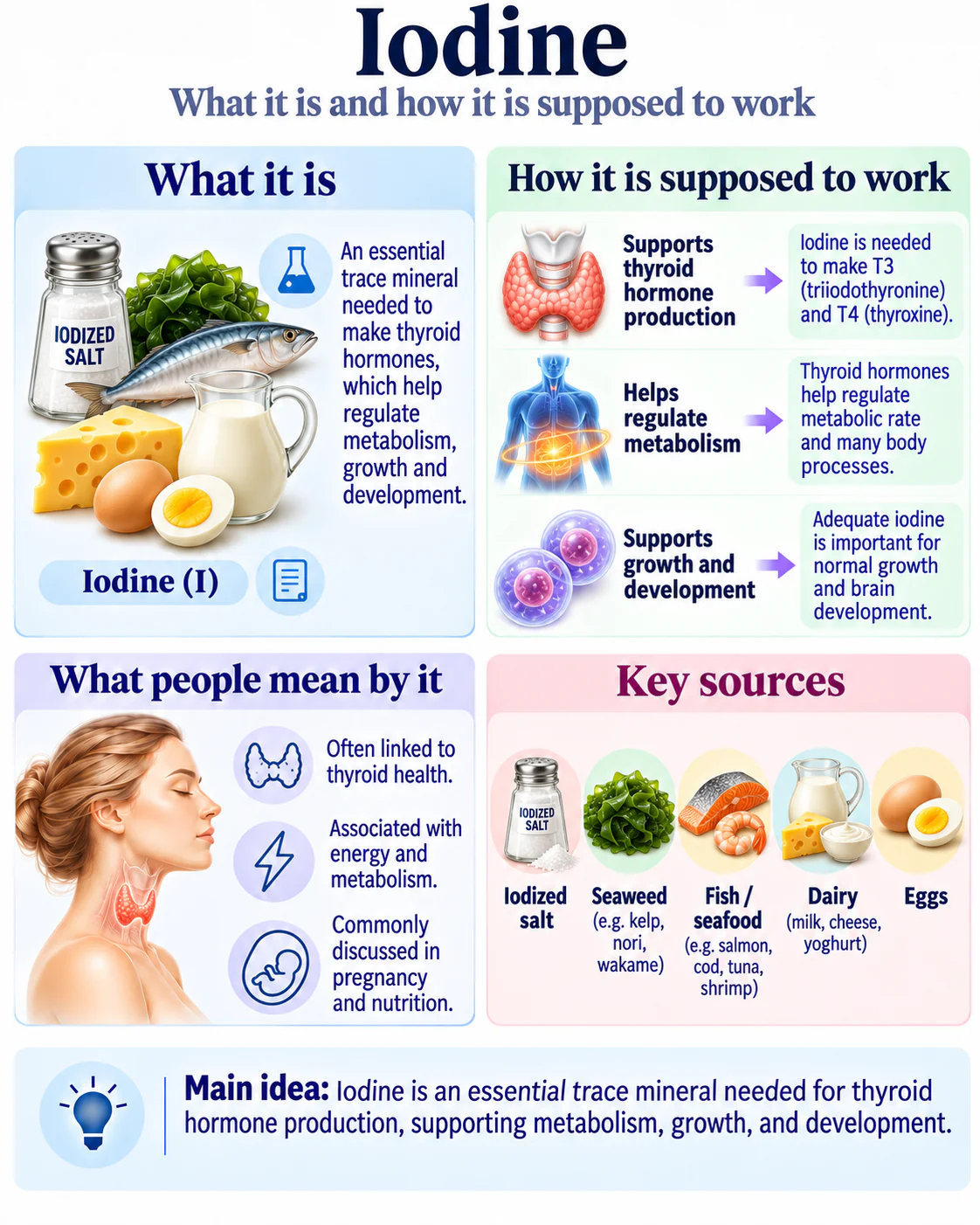
Read the image summary
Iodine is needed to make thyroid hormones, which contribute to metabolism, growth and development. Sources shown include iodised salt, seaweed, seafood, dairy and eggs. Iodine content varies, particularly in seaweed; both insufficient and excessive iodine can affect the thyroid.
Food, deficiency and safety
Iodised salt, seafood, dairy and eggs can provide iodine. Seaweed may contain very variable and sometimes very high amounts, and not every salt or prenatal supplement contains iodine. Both insufficient and excessive iodine can affect thyroid function. Needs change during pregnancy, but the appropriate approach depends on diet, local guidance and individual thyroid health.
People who eat little or no seafood, dairy or eggs, including some vegans, may have difficulty getting enough iodine; this does not establish that every person in those groups is deficient. Discuss the whole diet and local food supply with a health professional before choosing a supplement.1
Pregnancy, seaweed and thyroid supplements
Iodine contributes to thyroid hormones needed for a baby’s brain and bone development. Needs rise during pregnancy and breastfeeding, but food supply and guidance vary by country; not all prenatal products contain iodine. US NIH notes that some supplements use kelp, a seaweed whose iodine content varies. More is not automatically better: too much iodine can also disrupt thyroid function, especially in susceptible people. Include food, iodised salt and all supplements when discussing intake with a healthcare professional, particularly during pregnancy or if you have thyroid disease. Do not change prescribed thyroid treatment based on a supplement claim. For another nutrient and a closer look at thyroid supplement evidence, see selenium and Hashimoto’s thyroiditis.
For context, US reference intakes for adults aged 19 or older are 150 micrograms of iodine a day, 220 during pregnancy and 290 during breastfeeding, from the total diet and supplements. The US upper limit for adults in those groups is 1,100 micrograms a day from food and supplements combined. It is not a target or a personal safety threshold; people with thyroid conditions may be susceptible to excess. Recommendations and limits can differ by country and age, and medically supervised treatment is a separate question.13
Can one urine test diagnose iodine deficiency?
A urine iodine result reflects recent intake and can vary throughout the day and between days. Health authorities use groups of samples to assess populations, but a single spot urine result cannot reliably diagnose an individual deficiency or show how well the thyroid is working. A clinician can consider diet, products, health history and appropriate tests together; do not start high-dose iodine based on one result.12
Can iodine interact with medicines?
Iodine supplements can interact with antithyroid medicines. Products containing potassium iodide can also raise potassium levels when combined with certain blood-pressure medicines or potassium-sparing diuretics. Ingredients and amounts differ, so bring the exact package and a list of medicines to a pharmacist or clinician. See supplement and medicine interactions.3
What a supplement claim needs to show
More iodine is not a general treatment for fatigue, thyroid symptoms or metabolism. People with thyroid disease or questions about pregnancy should seek individual advice. Read the supplement label guide and the interaction guide for practical context.1
Further reading
Trusted external resources selected to help explain this page. They open in a new tab.
- Iodine: consumer fact sheet ↗US guidance; nutritional advice and product rules differ by country.
Sources, kept close.
Selected supporting sources; this is not a complete literature review.
- Iodine: Health Professional Fact SheetNIH Office of Dietary Supplements · Official nutrition evidence summary
- Urinary iodine concentrations for determining iodine status in populationsWorld Health Organization · WHO micronutrient population-assessment guidance
- Iodine: Fact Sheet for ConsumersNIH Office of Dietary Supplements · US government consumer evidence and safety summary