
The answer so far
Biotin is a vitamin found in foods, and deficiency is uncommon. Evidence that extra biotin helps people without deficiency is limited. Biotin supplements can interfere with some blood tests, so tell your healthcare team and the laboratory what you take.1
On this page
What the nutrient does
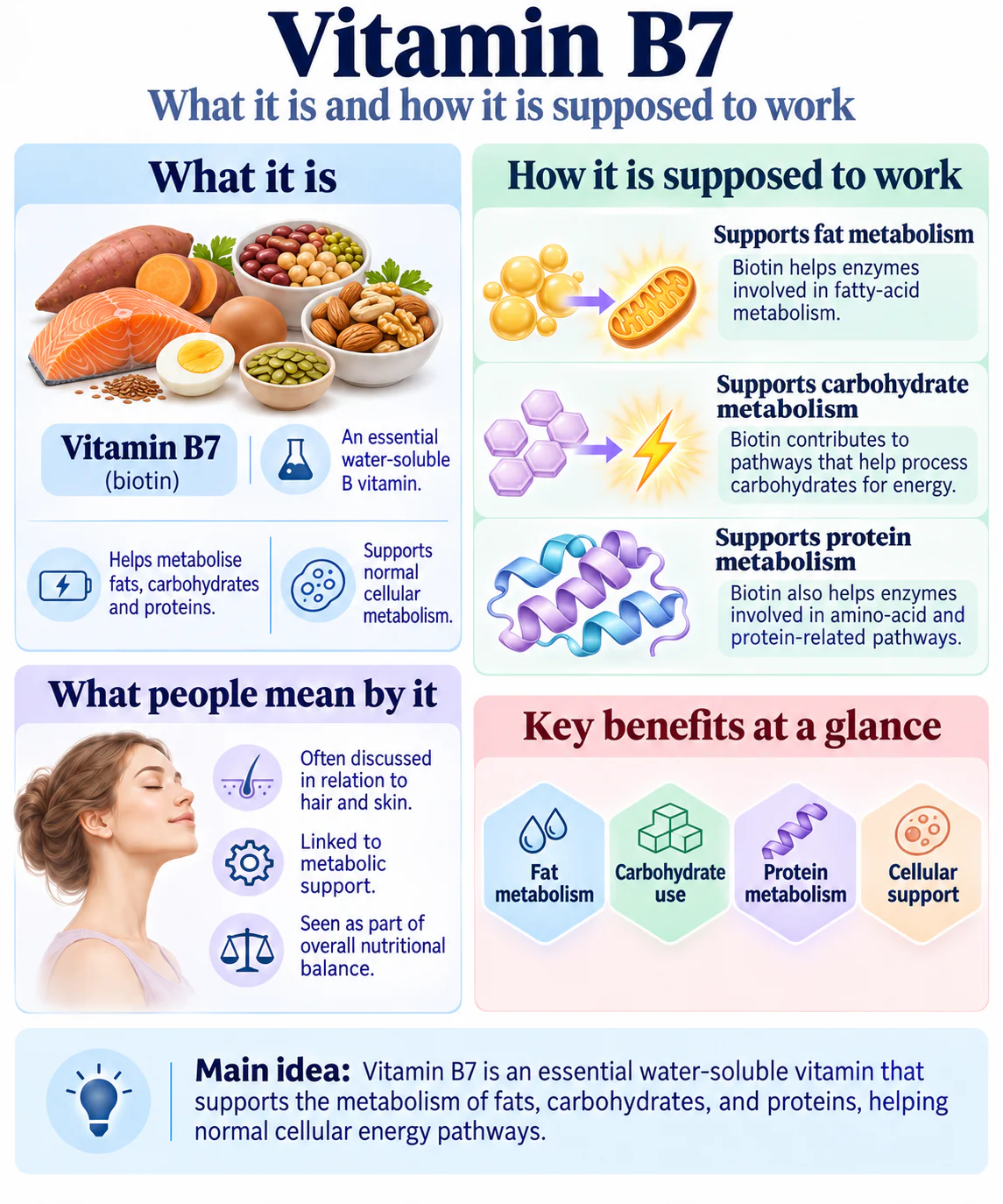
Biotin is a water-soluble vitamin that helps enzymes involved in fat, carbohydrate and amino acid metabolism.1
Read the image summary
Biotin, or vitamin B7, helps enzymes involved in fat, carbohydrate and amino acid metabolism. The illustration includes eggs, fish, nuts, seeds and legumes. Biotin supplements can interfere with laboratory tests; claims about hair and skin need their own evidence.
Food and deficiency
Foods such as eggs, fish, meat, seeds and some vegetables provide biotin. Deficiency is uncommon, though particular medical or dietary circumstances can increase risk. Biotin supplements can interfere with certain laboratory tests and produce misleading results, including some hormone and cardiac tests. Tell the healthcare team and laboratory about supplements before testing.
The US adequate intake for adults is 30 micrograms a day, including during pregnancy, and 35 micrograms during breastfeeding. These are estimates of total intake, not supplement doses.
NIH identifies biotinidase deficiency, long-term alcohol dependence and pregnancy or breastfeeding among situations associated with a greater risk of low biotin status. Long-term treatment with some antiseizure medicines has also been associated with lower biotin levels. A risk factor does not establish deficiency; discuss concerns with the treating clinician and do not stop prescribed medicine on your own.1
Biotin and blood tests: what the evidence shows
A 2020 study followed 10 healthy adults taking biotin for seven days and compared selected thyroid tests on three laboratory platforms. Biotin interfered with some tests on two platforms but not the third. The result depends on the test method, the amount and timing of biotin and the person; this small study does not establish a universal waiting period. The US FDA also warns that some troponin tests, used when assessing heart damage, can give falsely low results. Not all tests are affected. Tell the healthcare team and laboratory about biotin in supplements or prescribed products; ask them for test-specific instructions and do not delay urgent care.
Read how iron, calcium and biotin can affect thyroid medicine or tests.
In some affected thyroid tests, biotin can make thyroid-stimulating hormone (TSH) appear falsely low and thyroid hormones appear falsely high. Together, those results can resemble an overactive thyroid even when the pattern is caused by interference with the laboratory method. This does not mean every abnormal thyroid result is caused by biotin, or that every assay is affected. A clinician and laboratory can interpret the result and decide whether another test is needed; do not change thyroid medication based on this possibility alone.
For the difference between a thyroid-test measurement and an interaction that can reduce medicine absorption, see biotin, minerals and levothyroxine.23
What a supplement claim needs to show
Hair, skin and nail products often contain biotin, but evidence of benefit for people without deficiency is limited. An abnormal result or symptom needs assessment rather than an assumption of deficiency. Compare products using the supplement label guide and discuss personal concerns with a qualified professional.1
What is known about hair and nails?
Biotin deficiency can cause hair and nail changes, but that does not show that extra biotin helps people who are not deficient. The US NIH notes that evidence for brittle nails includes three small studies without a placebo group, and the participants’ baseline biotin status was not reported. Without a comparison group, improvement cannot confidently be attributed to the supplement. Hair loss and brittle nails have many possible causes, so a clinician can help assess persistent concerns.
Read the evidence on hair loss and weight-loss medicines, including trial rates and possible causes.1
Further reading
Trusted external resources selected to help explain this page. They open in a new tab.
- Biotin: Health Professional Fact Sheet ↗US scientific overview of biotin, deficiency and limitations of hair and nail studies.
- Biotin Interference with Troponin Lab Tests ↗FDA warning on interference with some troponin assays; not all tests are affected.
- Assessment of biotin interference in thyroid function tests ↗Study of ten healthy adults and selected thyroid tests; no universal waiting time follows.
Sources, kept close.
Selected supporting sources; this is not a complete literature review.
- Biotin: Health Professional Fact SheetNIH Office of Dietary Supplements · Official nutrition evidence summary
- Biotin Interference with Troponin Lab TestsU.S. Food and Drug Administration · Regulator laboratory safety information
- Assessment of biotin interference in thyroid function testsMedicine · Human laboratory methods study