
The answer so far
Copper is an essential nutrient, but taking extra is not automatically beneficial. Too much copper can be harmful, and long-term high doses of zinc supplements can reduce copper absorption.1
On this page
What the nutrient does
Copper is an essential trace mineral involved in iron metabolism, connective tissue and the activity of several enzymes.1
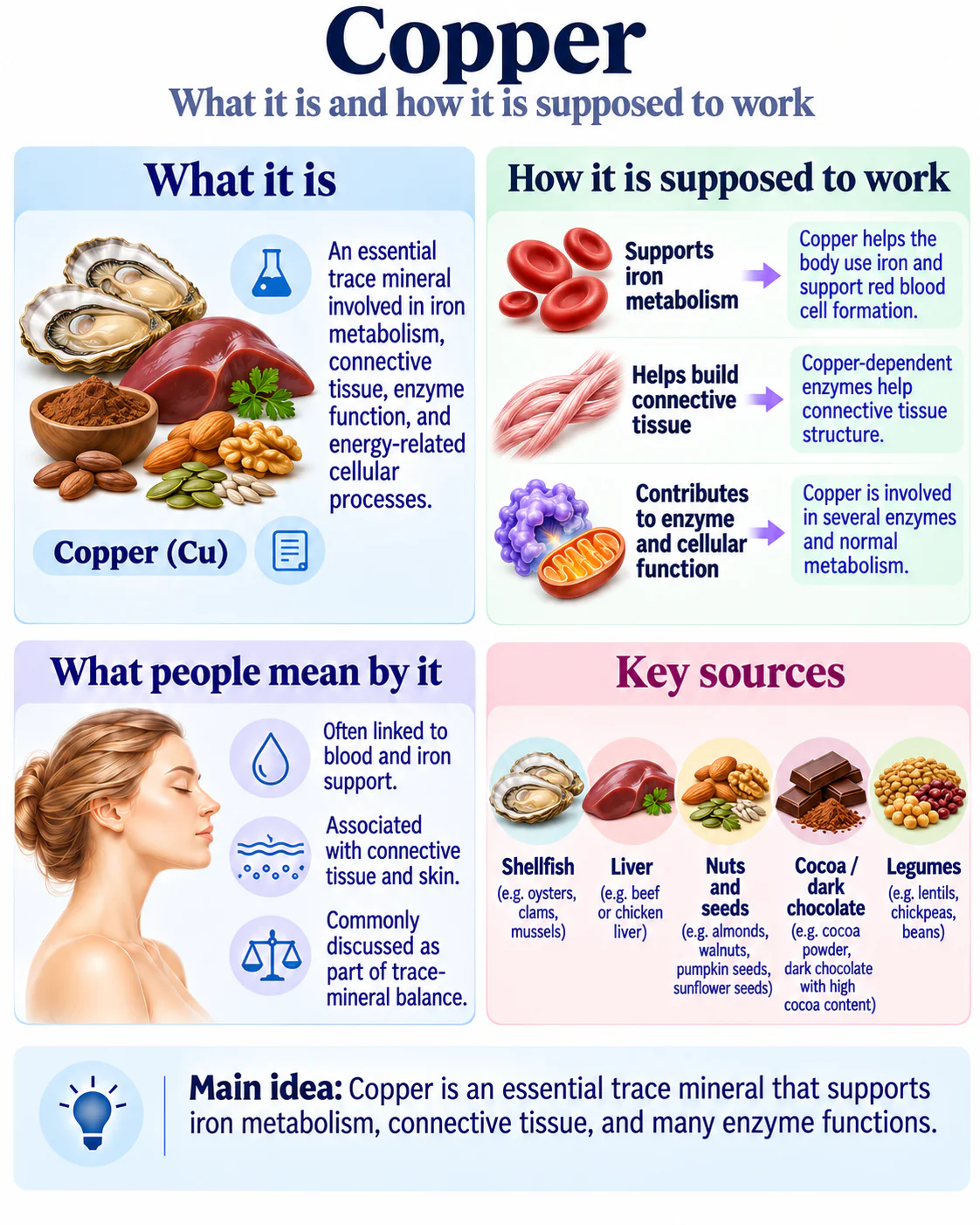
Read the image summary
Copper is an essential trace mineral involved in iron metabolism, connective tissue and enzyme function. Foods shown include shellfish, liver, nuts, seeds, cocoa and legumes. Excess zinc can interfere with copper absorption; copper supplements also have risks.
Food, deficiency and safety
Sources include shellfish, organ meats, nuts, seeds, cocoa and legumes. Dietary amounts vary by food and preparation. Too much copper can be harmful. Long-term high intakes of zinc supplements can reduce copper absorption and lead to copper deficiency; medical conditions can also change how copper is handled.1
Copper deficiency is uncommon, but can occur when the body cannot absorb enough, including in coeliac disease or after some gastrointestinal or weight-loss surgery. It can cause blood-cell changes or nerve and spinal-cord problems; some symptoms overlap with vitamin B12 deficiency and have other possible causes. Tell a clinician about new or worsening numbness, weakness or balance problems and any surgery or supplements you use. An assessment can consider more than one cause; do not start copper solely on the basis of symptoms. For a related question, see vitamin B12 and nerve health.15
Can a blood test give the whole answer? A clinician may consider blood copper and ceruloplasmin alongside symptoms, diet, medicines and medical history. These results can be affected by inflammation, infection, pregnancy and estrogen status, so a number needs context; it does not by itself establish the cause or the right treatment.15
Regularly getting too much copper can damage the liver. For adults, the US NIH lists an upper limit of 10 mg per day from food, drinks and supplements. This is not a target or a guarantee of safety for an individual; guidance differs by country. People with Wilson disease need specialist advice about copper.1
For dietary context, US recommended intakes are 900 micrograms a day for adults aged 19 or older, 1,000 during pregnancy and 1,300 while breastfeeding. These describe total intake from food and supplements, not a recommendation to add a supplement. Excess copper can also cause abdominal pain, nausea, vomiting or diarrhoea; those symptoms have many possible causes. If you suspect excessive exposure, seek prompt medical or poison-service advice.12
Can too much zinc cause copper deficiency?
Yes. Long-term high zinc intake can interfere with copper absorption. Zinc can appear in several products at once, such as multivitamins, stand-alone supplements, cold remedies and some denture adhesives; excessive use of zinc-containing denture cream has also been linked to low copper. Copper deficiency can have several causes and may affect blood cells, balance or coordination. These symptoms are not specific to copper deficiency and require professional assessment. Do not assume that adding copper is the right response: excess copper can also be harmful. A clinician or pharmacist can review the exact products and quantities. For zinc-specific evidence and precautions, see the zinc profile.
In Wilson disease, a genetic condition in which copper builds up in the body, a clinician may prescribe zinc to reduce copper absorption as part of ongoing care. This is different from taking extra zinc without assessment. People receiving treatment should discuss concerns with their specialist and not stop prescribed treatment on their own.234
What a supplement claim needs to show
Copper’s role in connective tissue is not proof that taking copper supplements or injecting a copper-containing peptide improves skin, hair or healing. Read the supplement label guide and the interaction guide for practical context.1
Further reading
Trusted external resources selected to help explain this page. They open in a new tab.
- Copper: consumer fact sheet ↗US evidence summary; symptoms have multiple possible causes.
Sources, kept close.
Selected supporting sources; this is not a complete literature review.
- Copper: Health Professional Fact SheetNIH Office of Dietary Supplements · Official nutrition evidence summary
- Copper: Fact Sheet for ConsumersNIH Office of Dietary Supplements · US official consumer nutrition and safety summary
- Zinc: Health Professional Fact SheetNIH Office of Dietary Supplements · Official nutrition evidence summary
- Treatment of Wilson DiseaseUS National Institute of Diabetes and Digestive and Kidney Diseases · US patient health information
- Copper DeficiencyMSD Manual Professional Edition · Clinical reference on copper deficiency