
The answer so far
Getting enough thiamin (vitamin B1) supports normal health. Taking extra is a separate question; severe deficiency can affect the heart and nervous system and may need urgent treatment.1
On this page
What the nutrient does
Thiamin helps enzymes release energy from food and supports normal growth and cellular function, including nervous-system function.1
Read the image summary
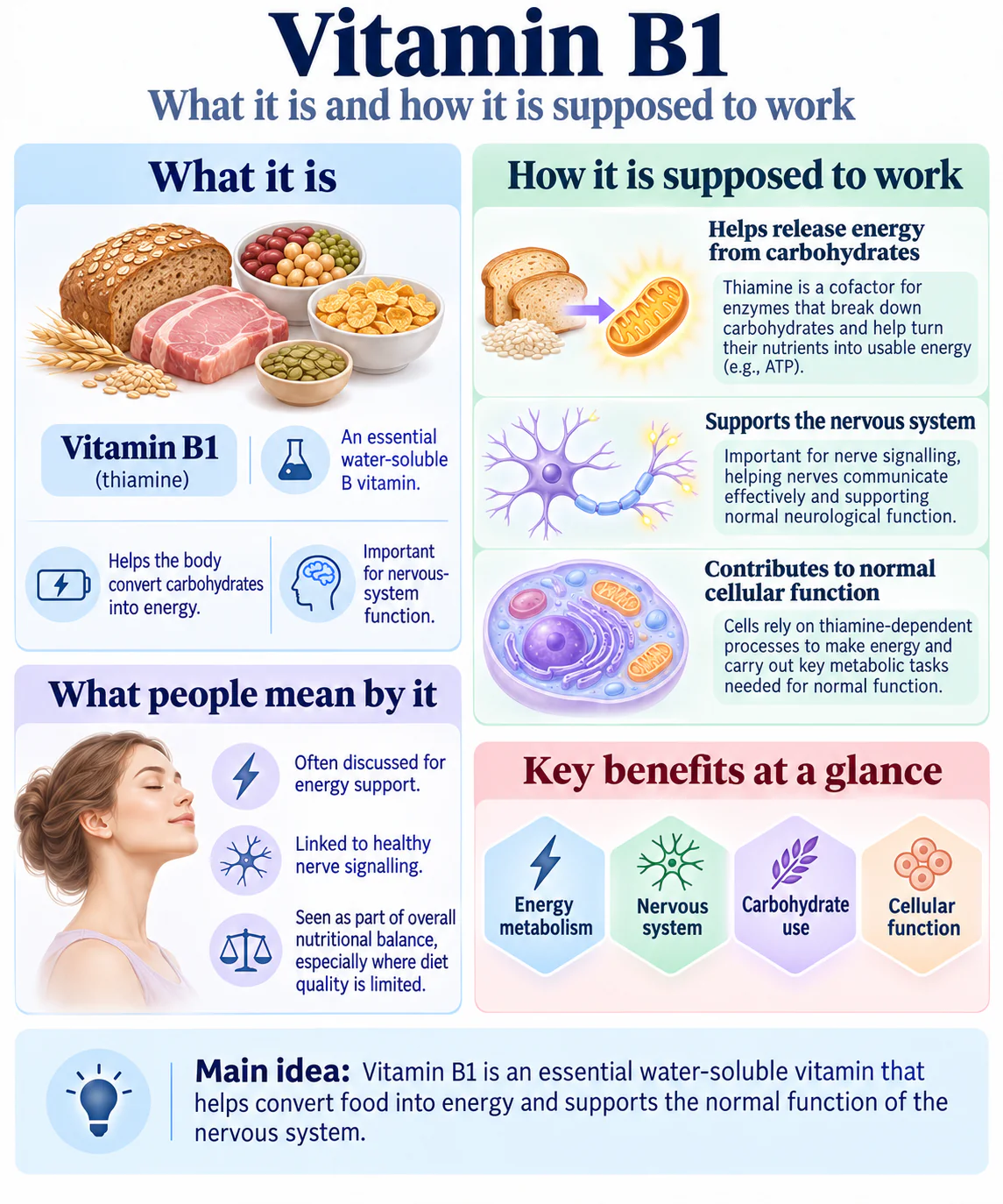
Vitamin B1, or thiamin, helps enzymes release energy from carbohydrates and supports normal nervous-system and cell function. The illustration shows whole grains, pork, legumes, seeds and fortified cereal. A nutritional role does not prove extra thiamin improves energy in someone without a deficiency.
Food and deficiency
Thiamin occurs in whole grains, pork, fish and beans; some cereals and breads are enriched or fortified. Processing and cooking can affect the amount present. Prolonged inadequate intake or impaired absorption can cause thiamin deficiency. Risk can be higher with alcohol use disorder, some illnesses or after bariatric surgery. Serious deficiency requires clinical assessment and treatment. Some medicines can also affect thiamin status: NIH notes lower levels associated with the diuretic furosemide and reports of deficiency with the cancer drug fluorouracil. This does not mean everyone taking them is deficient or needs a supplement; discuss concerns with the treating clinician and do not stop prescribed treatment on your own.31
NIH also identifies older adults and people with HIV or diabetes among groups who may have difficulty getting enough thiamin; belonging to a group does not establish an individual deficiency. Blood thiamin levels alone are not reliable indicators of status. A clinician can assess the person’s history and appropriate tests; urgent symptoms should not wait for test results.1
For dietary context, US recommendations for adults are 1.2 mg daily for men and 1.1 mg for women, and 1.4 mg during pregnancy or breastfeeding. These are total daily intake references, not individual supplement doses or treatment instructions.1
When can thiamin deficiency become an emergency?
Severe thiamin deficiency can affect the heart and nervous system. One serious brain condition associated with deficiency is Wernicke encephalopathy, which can involve confusion, difficulty walking or abnormal eye movements. It can occur in people with alcohol dependence but also in other situations involving malnutrition or impaired absorption, including after bariatric surgery. These symptoms have other possible causes and cannot diagnose a deficiency. Sudden confusion requires emergency medical assessment whatever the cause; do not wait for a supplement to work. Clinicians decide on appropriate tests and treatment.1324
The signs do not have to occur together: a person with Wernicke encephalopathy may not have the full set of confusion, walking difficulty and eye movement problems. Do not wait for all three before seeking help. Prolonged vomiting and poor intake can also raise concern about nutrition, including thiamin, without proving a deficiency. If vomiting continues after weight-loss surgery, contact the surgical team or clinician; during pregnancy, frequent vomiting with inability to keep food down warrants contacting a midwife, doctor or hospital as soon as possible. Vomiting has many causes, and these situations need assessment beyond a vitamin supplement.456
What a supplement claim needs to show
Thiamin is needed for normal metabolism, but the fact that it helps release energy from food does not establish that extra thiamin improves energy in someone with adequate status. Compare products using the supplement label guide and discuss personal concerns with a qualified professional.1
Further reading
Trusted external resources selected to help explain this page. They open in a new tab.
- Thiamin: consumer fact sheet ↗US government overview; diagnosis and treatment require clinical assessment.
- Sudden confusion ↗Sudden confusion has many possible causes and requires immediate help.
Sources, kept close.
Selected supporting sources; this is not a complete literature review.
- Thiamin: Health Professional Fact SheetNIH Office of Dietary Supplements · Official nutrition evidence summary
- Sudden confusion (delirium)NHS · UK public-health emergency guidance
- Thiamin: Fact Sheet for ConsumersNIH Office of Dietary Supplements · US consumer nutrition evidence summary
- EFNS guidelines for diagnosis, therapy and prevention of Wernicke encephalopathyEuropean Journal of Neurology · 2010 clinical guideline; signs can occur without the full triad
- Severe vomiting in pregnancyNHS · Patient guidance on assessment of severe pregnancy vomiting
- Life after a gastric bypass or sleeve gastrectomyUniversity College London Hospitals NHS Foundation Trust · Patient guidance after bariatric surgery